The Challenge
Motorway tunnels are among the most critical and challenging infrastructure to maintain. The Olympia Odos corridor includes dozens of tunnels, each containing jetfans for ventilation, generators for emergency power, pumps for water management, battery backup systems, and electrical transformers. A failure of any of these systems can force a tunnel closure — creating safety risks, traffic chaos, and significant costs.
Traditional maintenance follows fixed schedules: inspect every X months, replace components every Y years. This approach either replaces parts too early (wasting money) or too late (after a failure has already occurred). In the confined, harsh environment of a motorway tunnel — with vibration, dust, temperature extremes, and humidity — equipment degrades unpredictably.
Our Approach
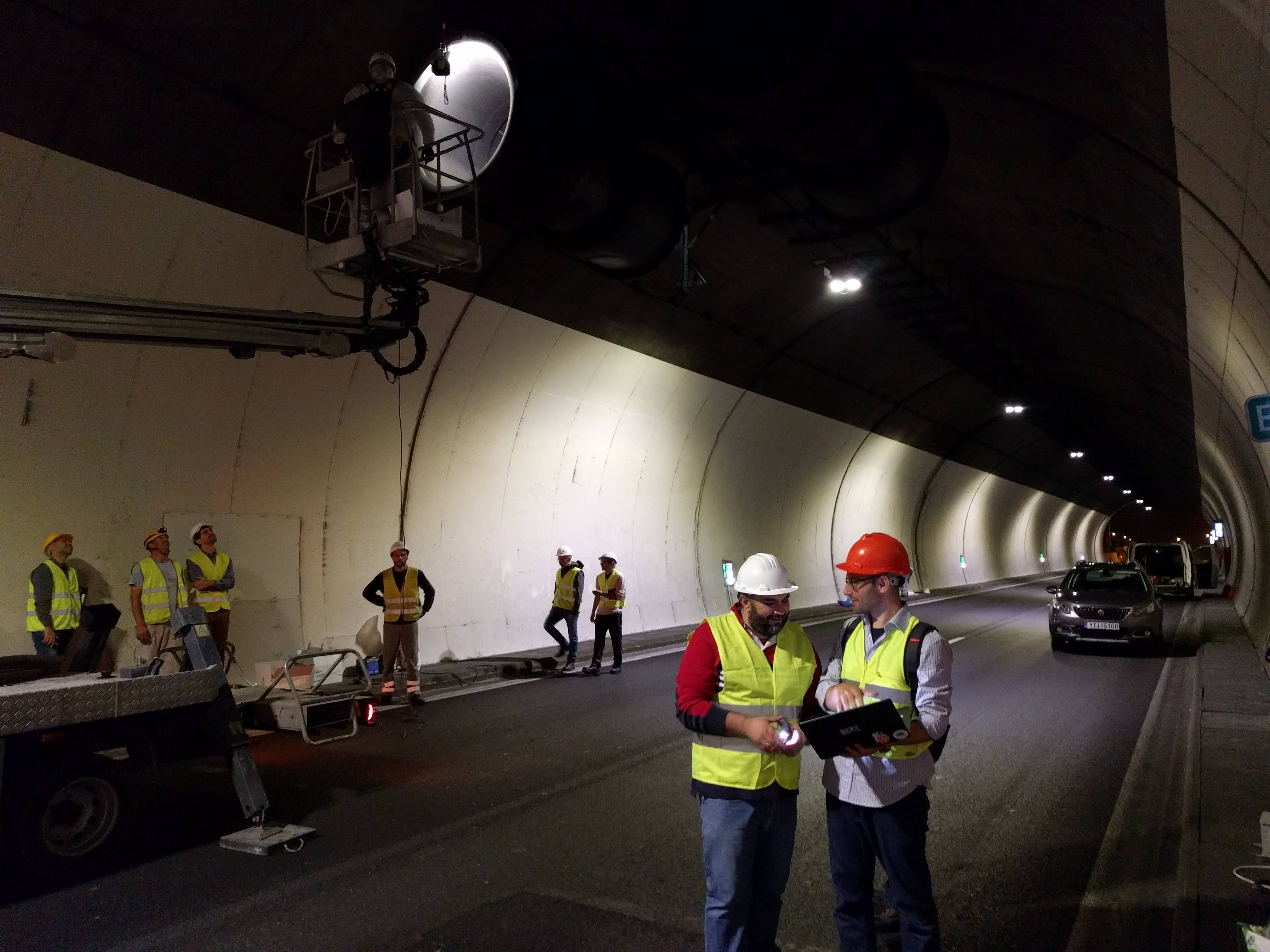
Ex Machina designed and deployed a comprehensive predictive maintenance system across multiple tunnels. The solution combines several sensor types with an IoT platform running ML-based anomaly detection:
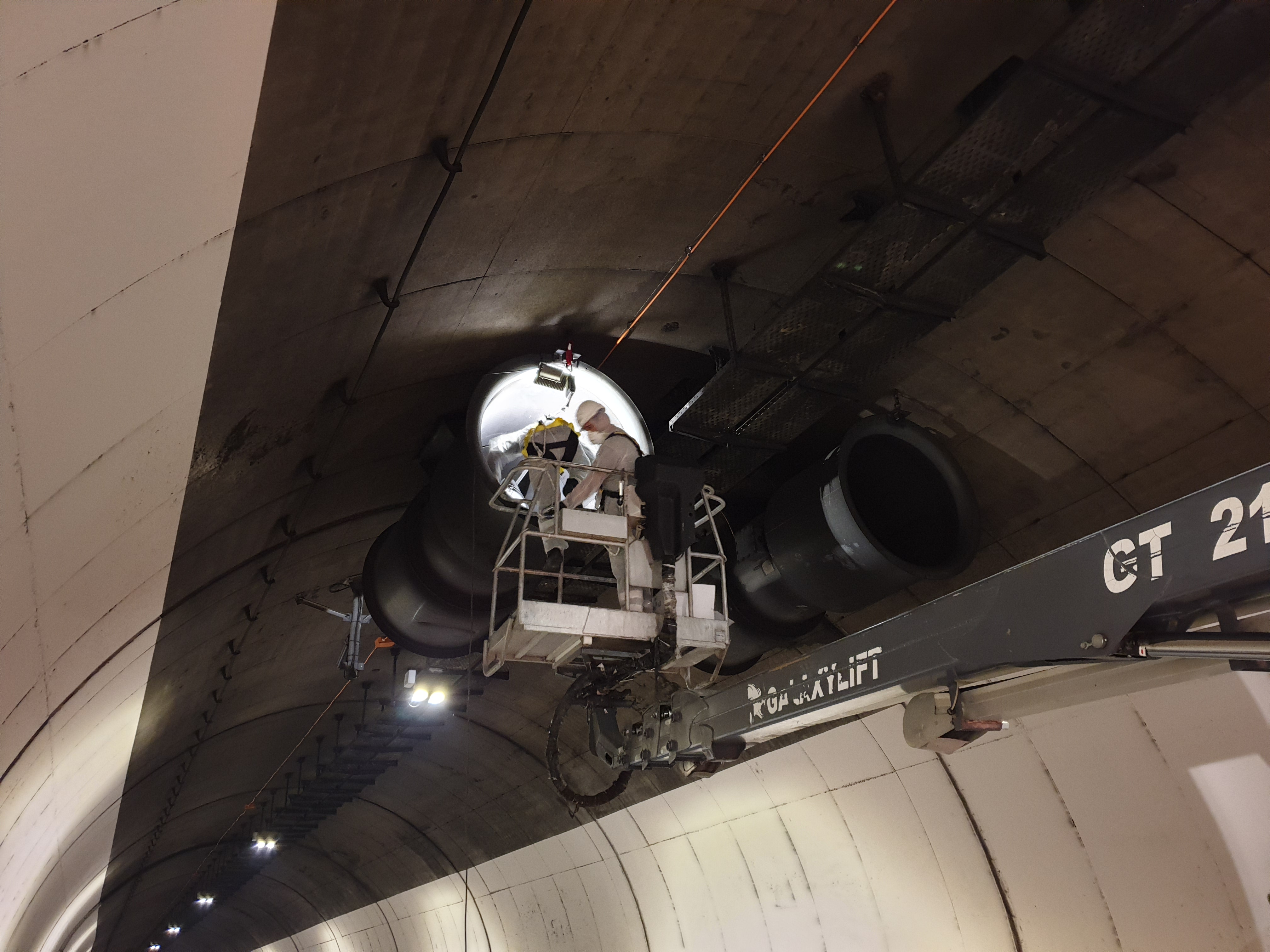
Vibration Monitoring: Accelerometers mounted on ceiling jetfans capture vibration signatures continuously. These signatures are the fingerprint of mechanical health — bearing wear, blade imbalance, motor degradation, and mounting fatigue all produce characteristic changes in vibration patterns long before catastrophic failure.
Environmental Sensing: Temperature and airflow sensors throughout the tunnels monitor both ambient conditions and the performance of ventilation systems. A jetfan producing less airflow than expected at a given power draw indicates developing problems.
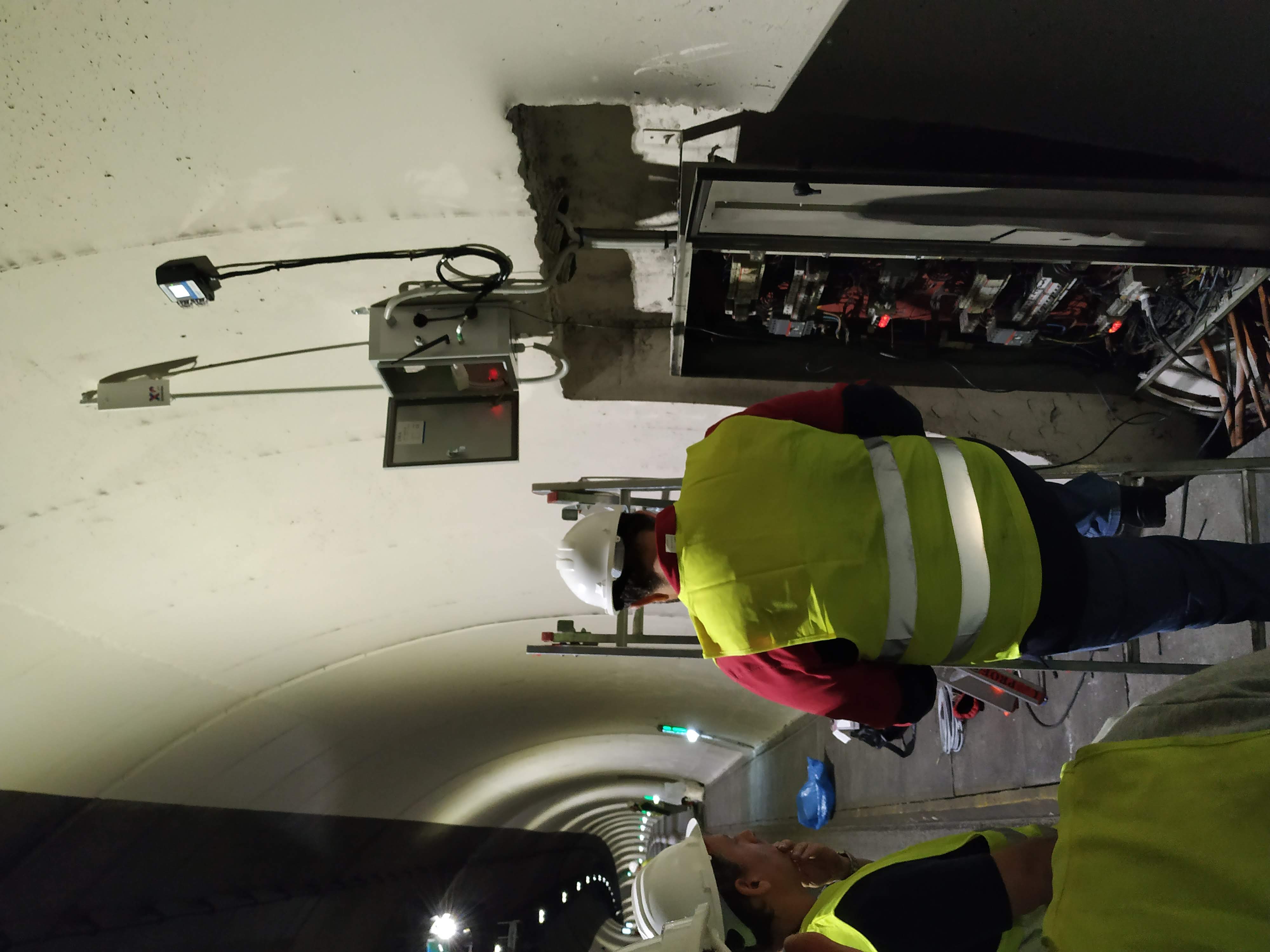
Power Monitoring: Electrical parameters of generators, pumps, and transformers are tracked continuously. Anomalous power consumption patterns — increased draw, harmonics, phase imbalance — are early indicators of equipment distress.
Wi-Fi Mesh Connectivity: Perhaps the most challenging aspect of tunnel IoT is connectivity itself. Tunnels are RF-hostile environments — concrete, rock, and metal create dead zones that conventional wireless cannot penetrate. Ex Machina deployed Wi-Fi mesh networks that provide reliable connectivity deep underground, enabling real-time data transmission from every sensor to the monitoring platform.
ML-Based Anomaly Detection
The sensor data feeds ML models that learn the normal operating behavior of each piece of equipment. Rather than relying on fixed thresholds (which require expert tuning and miss subtle degradation), the models identify deviations from learned baselines. This approach catches:
- Gradual degradation — slow bearing wear that would be invisible on any single inspection
- Intermittent faults — problems that appear under specific conditions (temperature, load, time of day)
- Correlated failures — when one system’s anomaly predicts another system’s upcoming failure
Maintenance teams receive actionable alerts with context: what is changing, how fast, and what the likely cause is.
Results
Since deployment, the system has achieved zero unplanned tunnel closures due to equipment failure. Maintenance has shifted from calendar-based to condition-based, meaning interventions happen when they’re actually needed. Equipment lifespan has been extended because components are no longer replaced prematurely. The 24/7 monitoring capability means that even overnight or weekend degradation events are caught and flagged before they become emergencies.
The tunnel predictive maintenance system demonstrates a core principle of Ex Machina’s approach: the value of IoT is not in the sensors themselves, but in the intelligence layer that transforms raw data into decisions.