The Challenge
Piraeus Container Terminal (PCT) is one of the busiest container ports in the Mediterranean, handling millions of TEUs annually. Crane operations — the heart of container terminal productivity — are acutely sensitive to wind conditions. When winds exceed safe thresholds, cranes must be shut down, vessels wait at anchor, and schedules cascade into delays that cost operators and shipping lines significant revenue.
The problem is that wind at a container terminal is nothing like wind at the nearest airport weather station. Buildings, stacked containers, vessel superstructures, and the coastline itself create turbulent, hyperlocal conditions that vary dramatically across a few hundred meters. Standard weather forecasts, even good ones, are useless at the crane level.
Our Approach
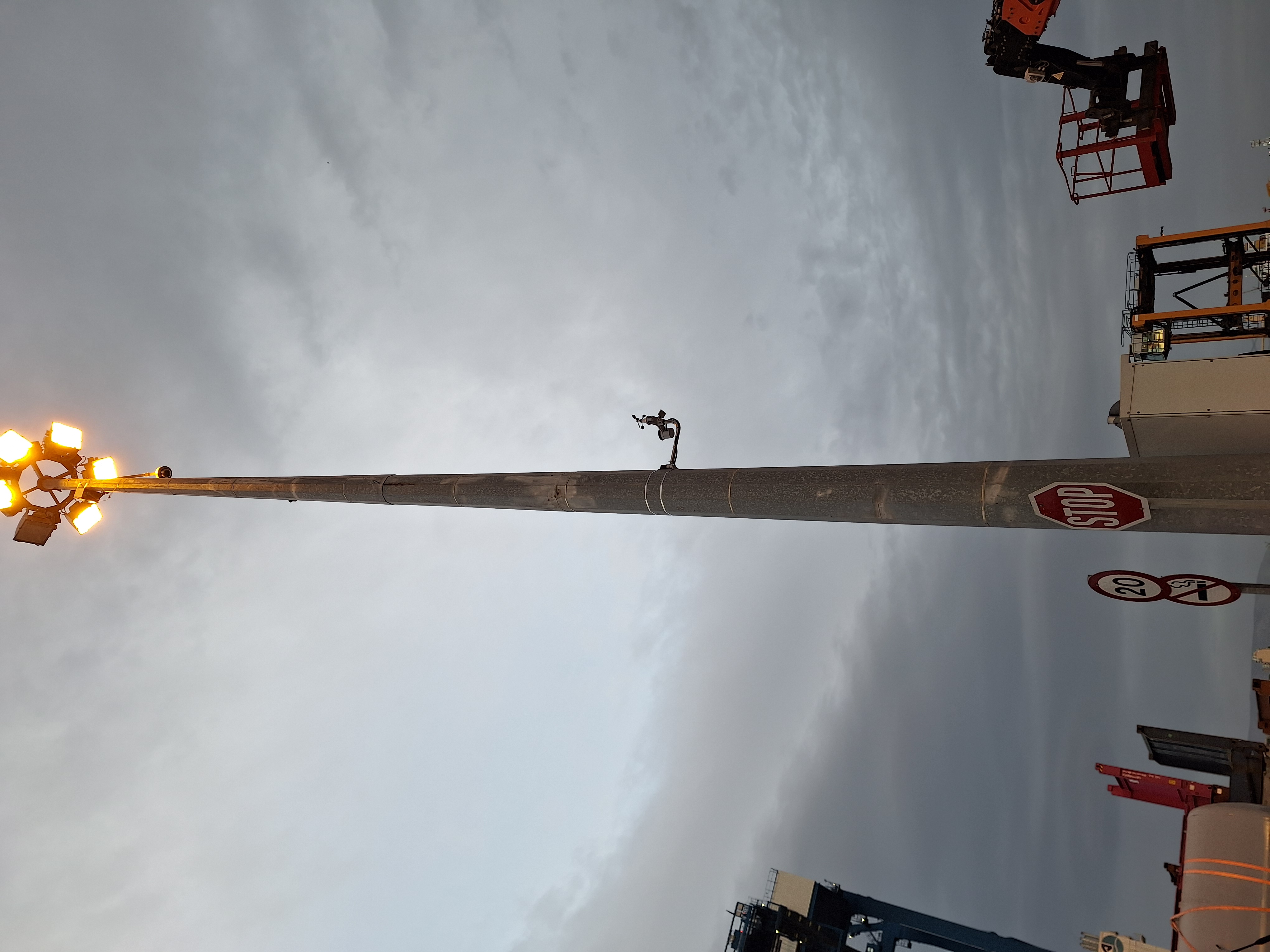
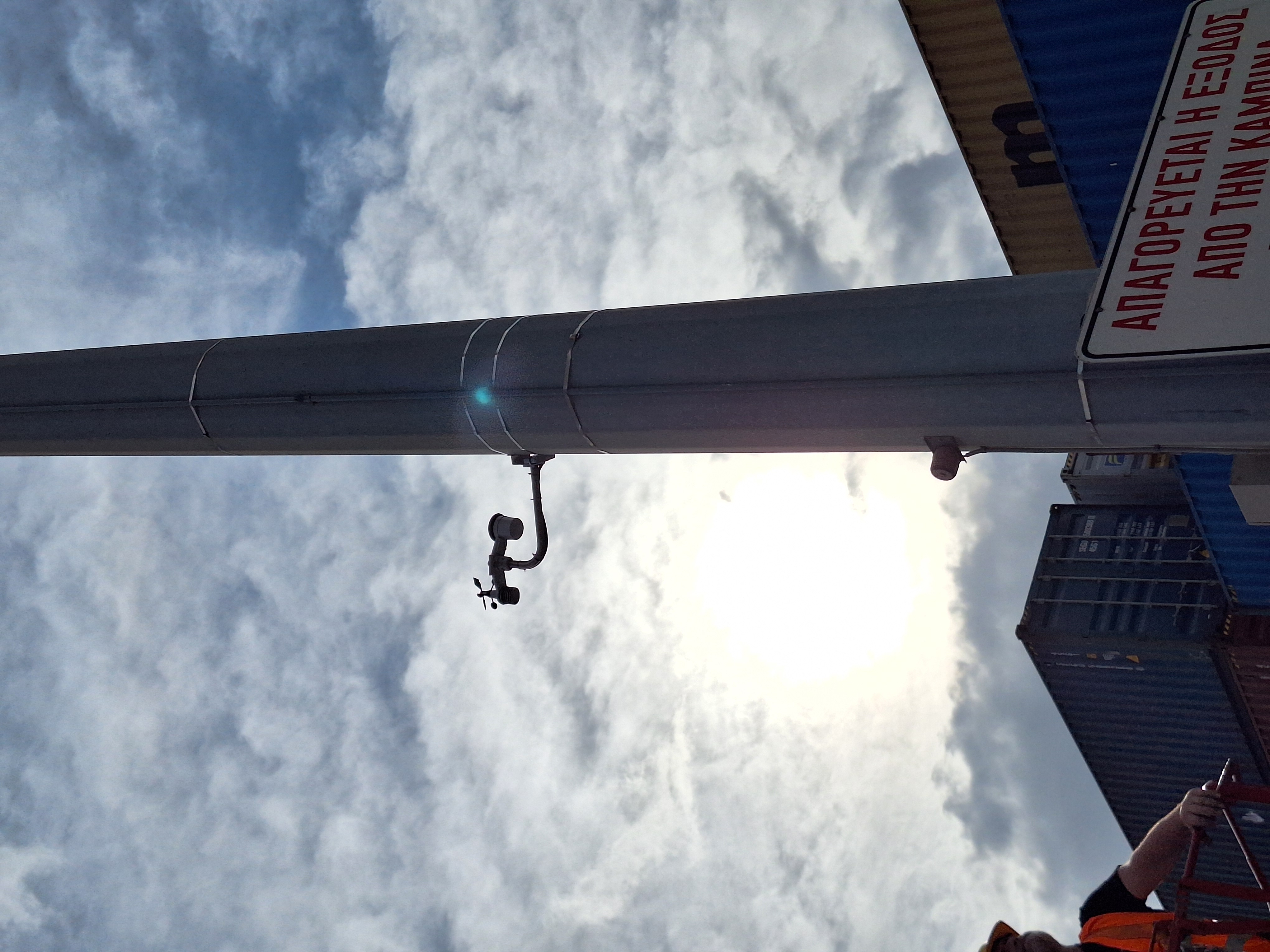
Ex Machina deployed a dense network of 28 WeatherXM weather stations across the terminal, positioned at crane locations and key operational zones. Each station reports wind speed, direction, gusts, temperature, humidity, and pressure every 3 minutes — an order of magnitude more frequent than typical meteorological stations.
This dense observational dataset feeds ML-enhanced forecasting models that learn the specific wind behavior of the terminal. The models account for:
- Terrain and structure effects — how stacked containers, quay walls, and vessel profiles redirect and accelerate airflow
- Temporal patterns — how sea breezes develop, when thermal effects peak, and how overnight conditions differ
- Incoming weather systems — blending mesoscale forecast data with local observations for short-term prediction
The result is a forecast system that speaks the language of the terminal, not the region.
Prediction Performance
The ML-enhanced models deliver a 55% improvement in gust prediction accuracy within the critical 0-4 hour operational window — the timeframe that matters most for crane scheduling decisions. Crane operators and terminal planners receive forecasts tailored to their specific location within the port, not generic area predictions.
With 3-minute reporting intervals, the system also provides real-time situational awareness. If conditions are deteriorating faster than forecast, operations teams see it immediately and can make proactive decisions rather than reactive ones.
Operational Impact
The forecasting system transforms wind from an unpredictable disruption into a managed variable. Terminal operators can now:
- Plan crane operations hours ahead with confidence in wind conditions
- Optimize vessel berthing by scheduling arrivals during favorable wind windows
- Reduce unnecessary shutdowns by trusting hyperlocal data over conservative regional forecasts
- Improve safety by having precise, location-specific wind data at each crane
The combination of WeatherXM hardware, dense station deployment, and ML-enhanced forecasting demonstrates how purpose-built IoT infrastructure can solve problems that off-the-shelf solutions simply cannot address.