The Challenge
Water-related disasters are among the most destructive forces on the planet. According to UNISDR, approximately 90% of natural disasters involve water. Between 1995 and 2015, floods alone represented 43% of documented natural disasters — affecting 2.3 billion people, causing 157,000 deaths, and resulting in US$662 billion in damages. In Europe, 213 recorded flood and storm events between 1998 and 2009 caused 1,126 deaths and €96 billion in losses.
Yet monitoring the surface water bodies that drive these events remains surprisingly primitive. In Greece, national water quality sampling happens as infrequently as three times a year. Field operations require specialized personnel and equipment; results take time to process; and by the time data is available, it’s often too late to be actionable. Available open water data from EU sources is primarily static, infrequently updated, and in formats that aren’t machine-readable.
Real-time, continuous surface water monitoring is the missing piece — for both public safety and environmental management.
The Partnership
In 2018, the Hellenic Centre for Marine Research (HCMR) — Greece’s preeminent body for aquatic environmental science, comprising three specialized research institutes — initiated a collaboration with Ex Machina to fill this gap. The goal: build an integrated, affordable IoT solution for remote, real-time monitoring and analysis of surface water environmental parameters.
As Manolis Nikiforakis, CEO of Ex Machina, described the partnership: “HCMR is the preeminent specialized body in Greece for environmental planning of such a project, with extensive experience and expertise in surface water environmental monitoring. The collaboration with Ex Machina aims to implement an Internet of Things solution that will provide immediate information to authorities and citizens.”
HCMR scientific coordinator Elias Dimitriou noted Ex Machina’s “particular dynamism in the field of research and development of innovative environmental products and services” and their “positive outward orientation promoting participatory practices for open data collection and provision.”
Our Approach
Open ELIoT (EnvironmentaL IoT) is built on four principles: open architecture, open hardware, open software, and open data. The result is a low-cost, energy-autonomous, portable sensor platform with minimal maintenance requirements and full public data access via an online platform and API.
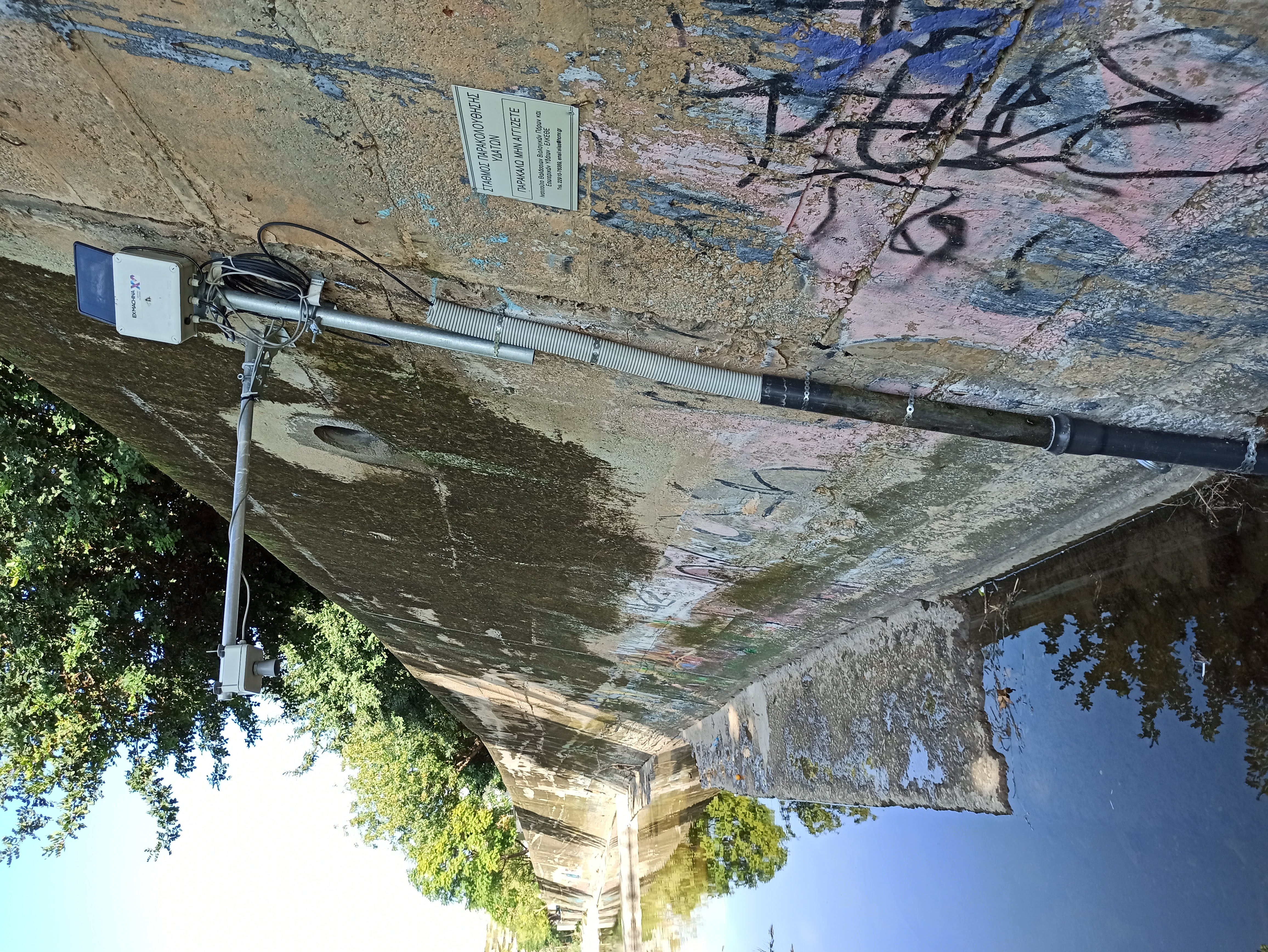
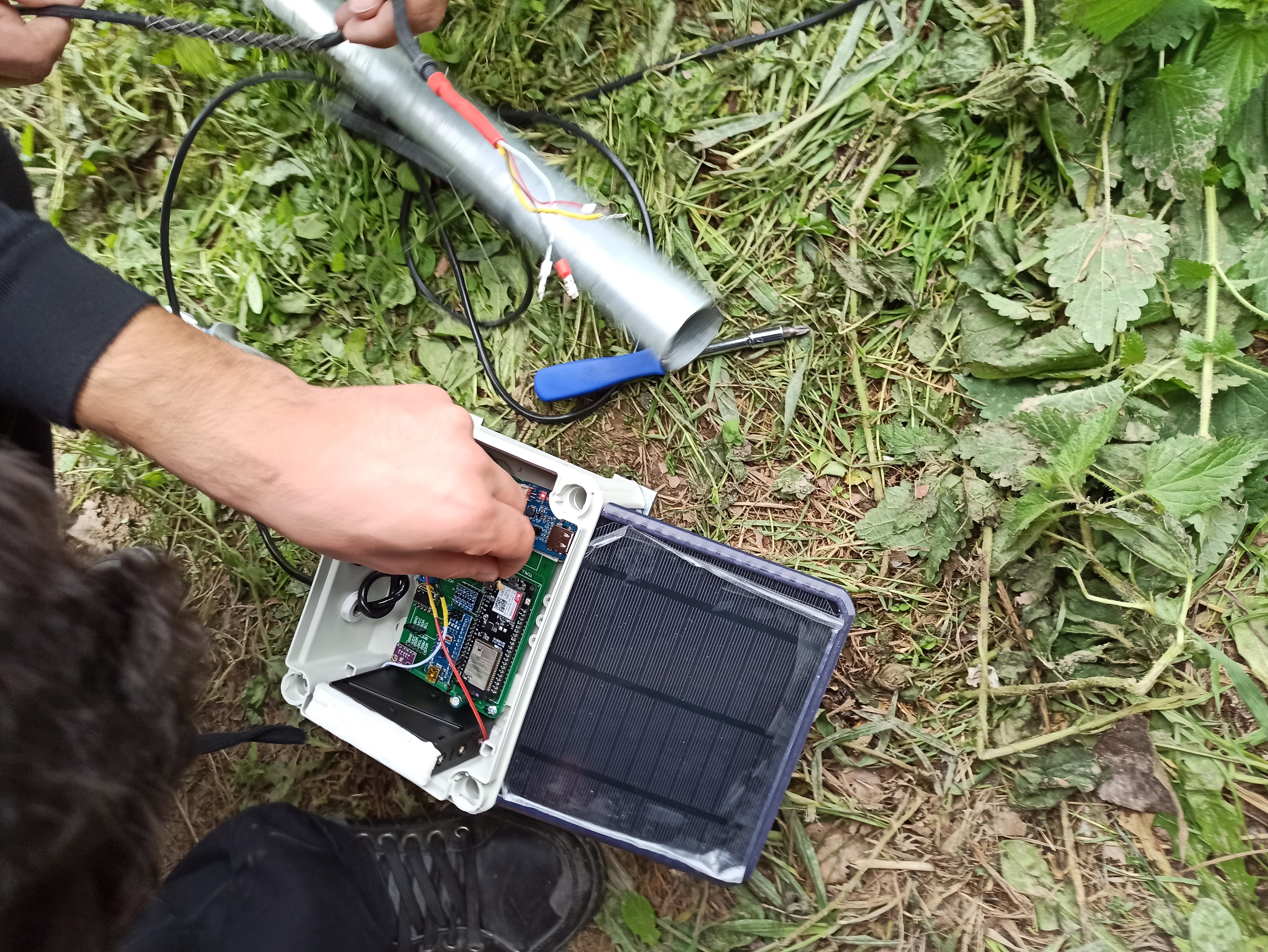
Sensor Nodes: Each ELIoT node performs remote, real-time monitoring of water quality and quantity parameters. The hardware is designed for long-term autonomous deployment in rivers and lakes — surviving floods, debris, and seasonal extremes without grid power or wired connectivity.
Wireless Data Transmission: All measurements transfer wirelessly to the ELIoT online platform for validation, evaluation, and visualization. Data is made available as open data — publicly accessible in real time, in machine-readable formats with explicit open data licensing.
Open Source & Citizen Science: The open hardware design means DIY enthusiasts can build their own ELIoT kits to monitor local aquatic environments. The platform is built to aggregate data from community-deployed nodes alongside professional deployments, creating a collaborative monitoring ecosystem.
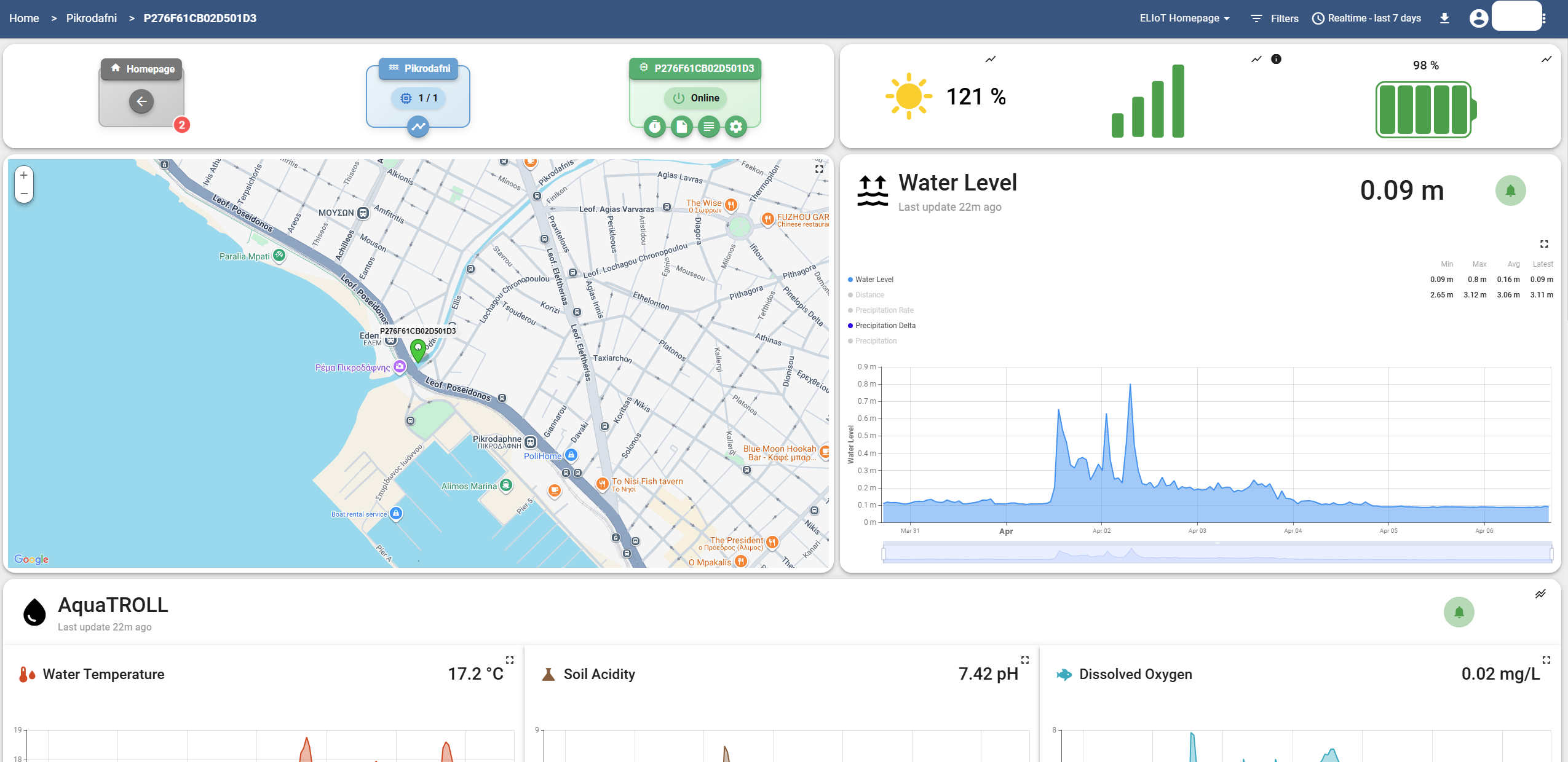
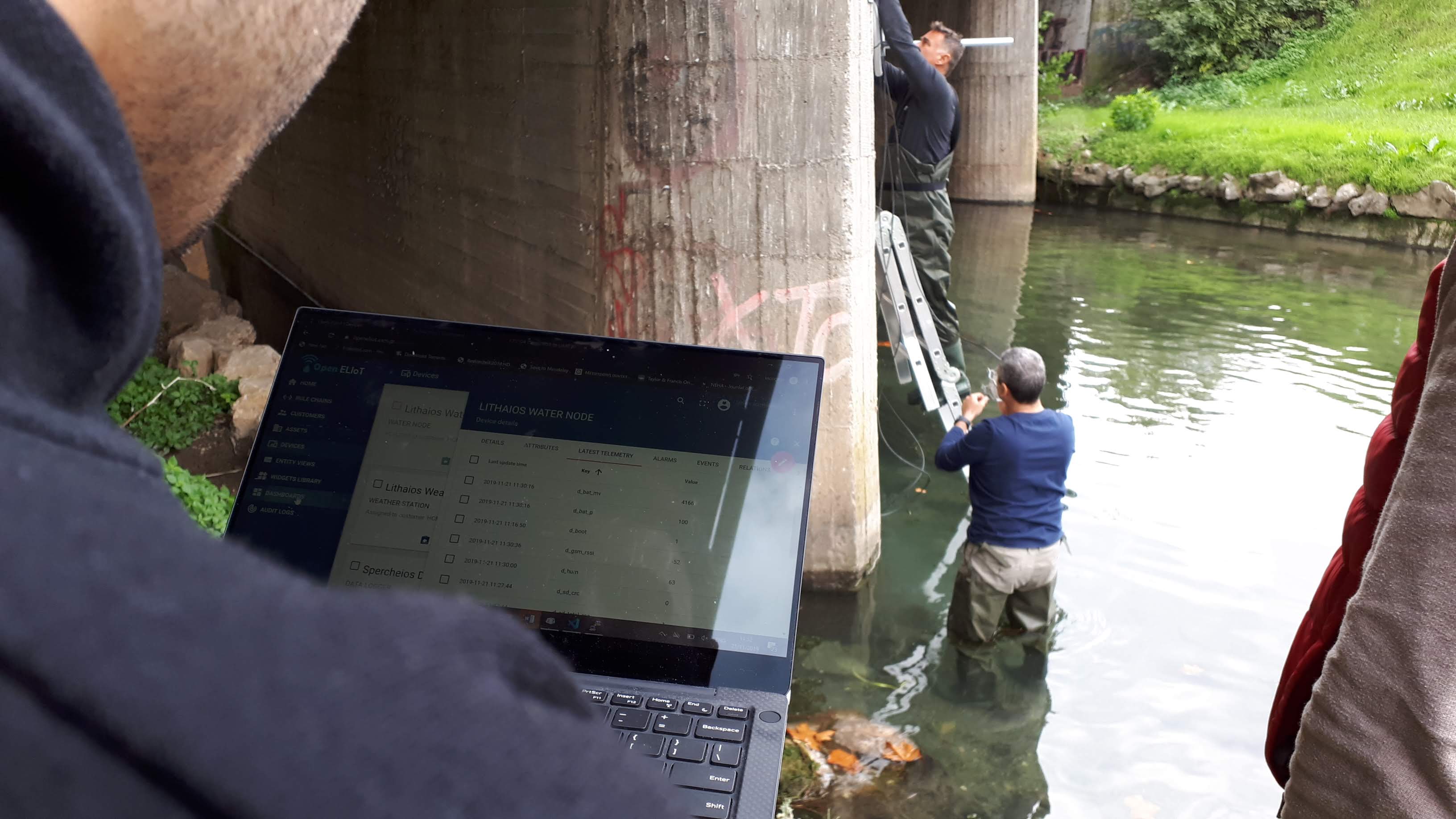
First Deployment — Pikrodaphni River: In October 2019, Ex Machina and HCMR deployed the first ELIoT node at the Pikrodaphni river in Paleo Faliro, Attiki. This was the first environmental monitoring station in Greece providing real-time open water data for public decision-making and citizen services.
The Platform
The ELIoT online platform spans the full IoT value chain — from sensor data acquisition to cloud storage, processing, analysis, and visualization:
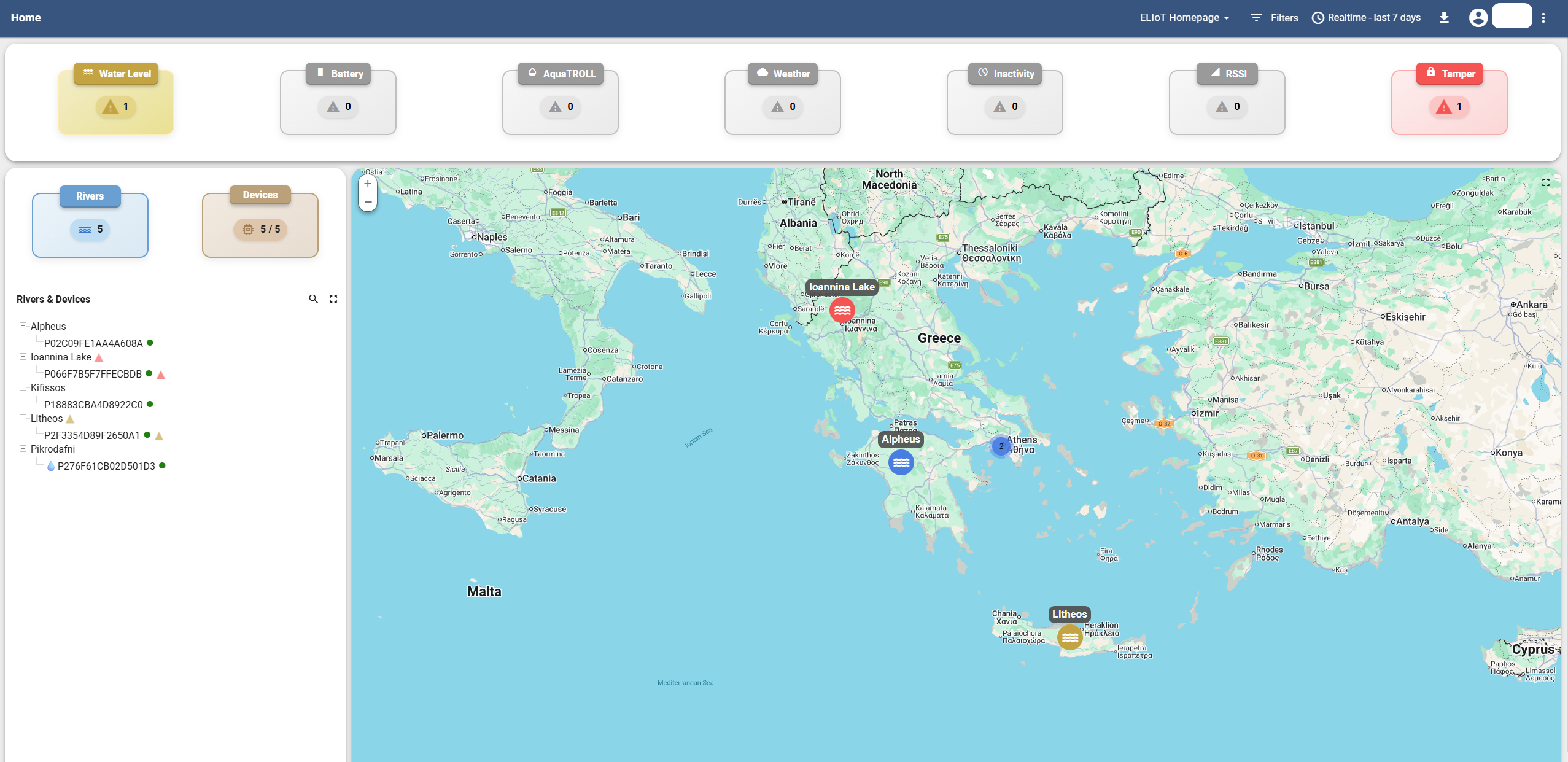
- Real-time dashboards with map-based views of all active monitoring stations
- Live data feeds for water quality and quantity parameters at each node
- Automated early warning for flood conditions, drought onset, and pollution events
- API access for researchers, authorities, and developers to integrate data into their own tools
- Public open data portal with full historical datasets under open licensing
Results
Open ELIoT provides live data for three rivers in Greece, publicly accessible in real time. The Pikrodaphni deployment — the first of its kind in the country — demonstrated that affordable, open, real-time water monitoring is achievable at scale.
The platform serves dual value: for HCMR researchers, it delivers continuous multi-parameter datasets that replace sparse periodic sampling with dense time-series data. For civil protection and environmental authorities, it provides early warning capability that enables proactive response rather than after-the-fact damage assessment.
Plans are in place to deploy additional ELIoT nodes in major rivers outside the Attiki region, expanding Greece’s real-time surface water monitoring coverage and growing the open data ecosystem around environmental intelligence.