The Challenge
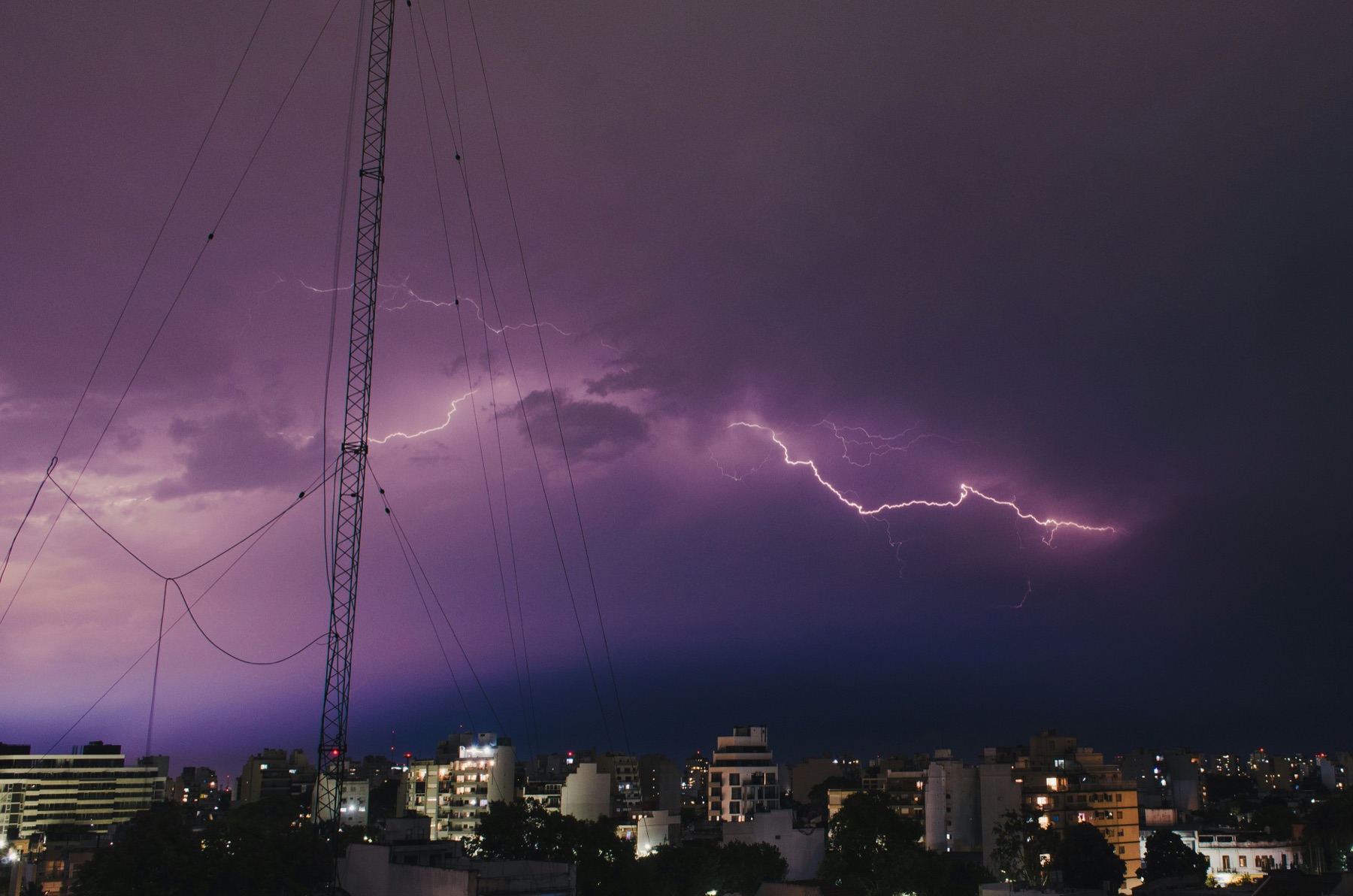
Lightning can damage telecom equipment, but for a network operator the scale of the problem is often an assumption. COSMOTE, Greece’s largest telecommunications provider (OTE Group), saw more equipment faults in thunderstorm conditions, yet had never confirmed the link with data. Without that, deciding which equipment to protect or upgrade, and where, was guesswork.
COSMOTE wanted to answer two questions. Where does lightning really cause faults, and by how much? And could it be forecast early enough to act on, in the next hours rather than the next season?
Our Approach
Ex Machina ran the project as a proof of concept in two connected phases.
1. Weather-sensitivity analysis. We took two years of historical network faults across multiple locations in Attica and matched them against historical weather and lightning-stroke data. The analysis grouped faults by equipment type and area, and produced a risk assessment for each, along with correlation models for use in forecasting. Interactive maps showed lightning flash density and fault locations side by side, so engineers could see, for example, equipment sitting in heavy lightning zones that had never failed, and judge whether its protection was working.
2. Hyperlocal lightning and weather sensing. Public lightning data is too coarse to pin a single fault to a single stroke. We deployed five Ex Machina weather stations with built-in lightning sensors at COSMOTE sites around Athens, on and near its 5G antennas, connected over NB-IoT. Their readings fed real-time maps of strokes and local conditions, a hyperlocal lightning nowcast and thunderstorm forecast, and alerts per equipment type and area.
Because the stations and sensors were new, the project also included a hardware and accuracy track. We compared several lightning-sensor designs and evaluated our local lightning detections and forecasts against professional lightning data, with accuracy dashboards to track the comparison over time.
Defined Success Criteria
The proof of concept set explicit targets for judging the forecasts: a lightning nowcast accuracy above 50%, and at least 30% of new equipment faults forecast in advance by the system.
From Prototype to Research
The engagement grew into a longer-term research effort with COSMOTE. It covers how nearby lightning and thunderstorms affect the equipment at those antenna sites, including correlations between lightning activity and equipment damage, and resulted in a report to COSMOTE.
Why It Matters
For a network operator, weather-sensitivity analysis turns lightning from a general risk into a measurable one. It allows upgrades to be prioritised by data-supported failure risk per equipment type and area, previous protection work to be evaluated, and lightning-induced faults to be identified faster with pin-point lightning data. It also supports short-term action, such as pre-positioning crews or alerting field staff and customers ahead of a storm.