The Challenge
Athens International Airport (AIA) “Eleftherios Venizelos” is Greece’s biggest airport, operating since 1996 and serving approximately 20 million passengers in 2016 — a 10.7% increase year over year. AIA shows a strong commitment to environmental protection: it was the first airport in Greece to become carbon neutral (Level 3+, 2016) and one of only 28 airports globally to achieve that status.
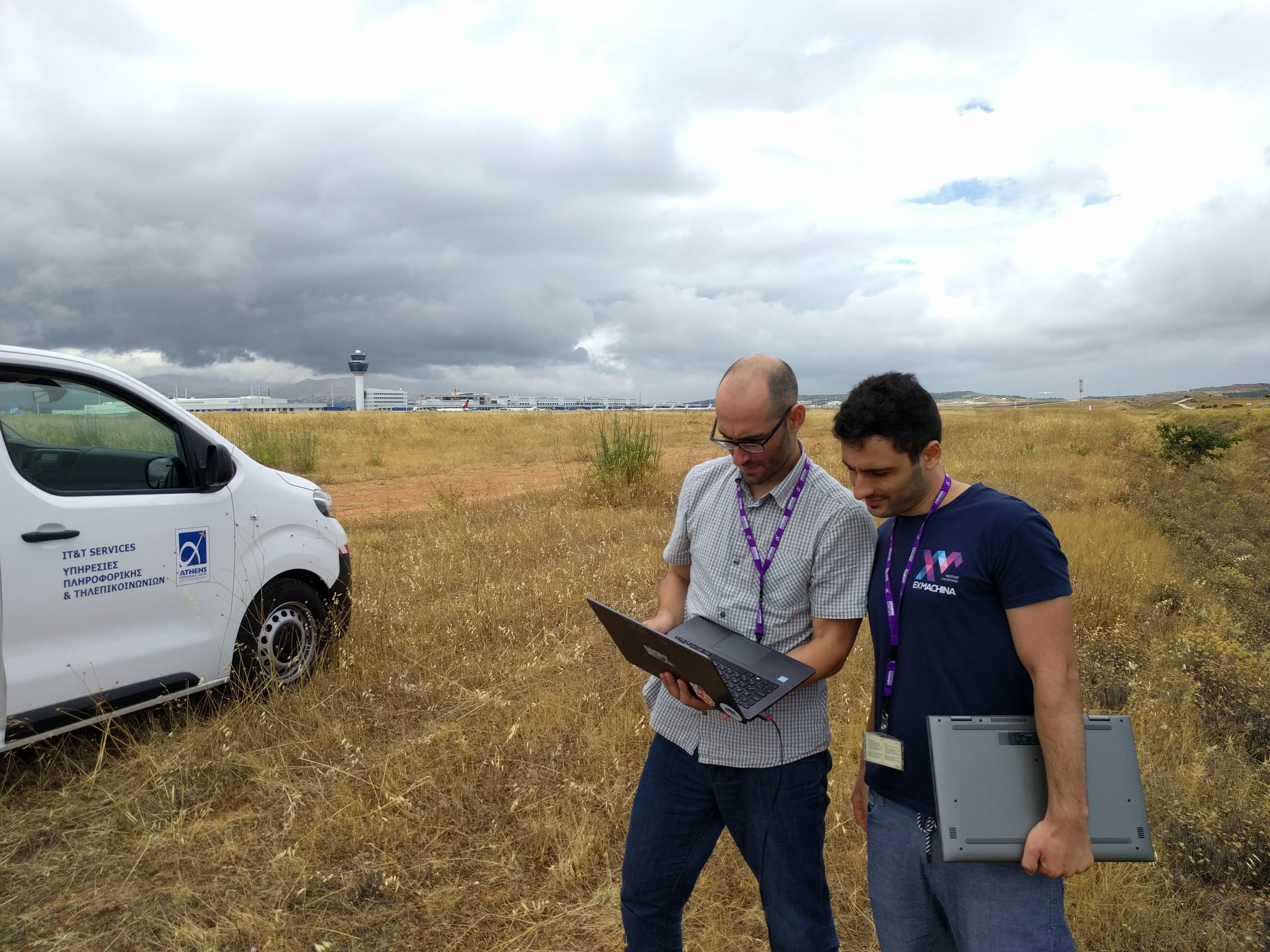
For AIA, environmental commitment goes hand in hand with innovation. In 2016, in search of a custom solution for environmental monitoring, analysis, and reporting, AIA partnered with Ex Machina. The brief covered two distinct challenges: monitoring air pollutant concentrations at arbitrary locations across the airport site, and understanding aircraft noise level patterns affecting neighboring communities.
Traditional approaches rely on periodic manual measurements or sparse fixed stations with limited parameters. These produce snapshots, not a continuous picture. When a noise complaint arrives or a regulatory query comes in, there is rarely correlated, timestamped measurement data to support a proper response.
Our Approach
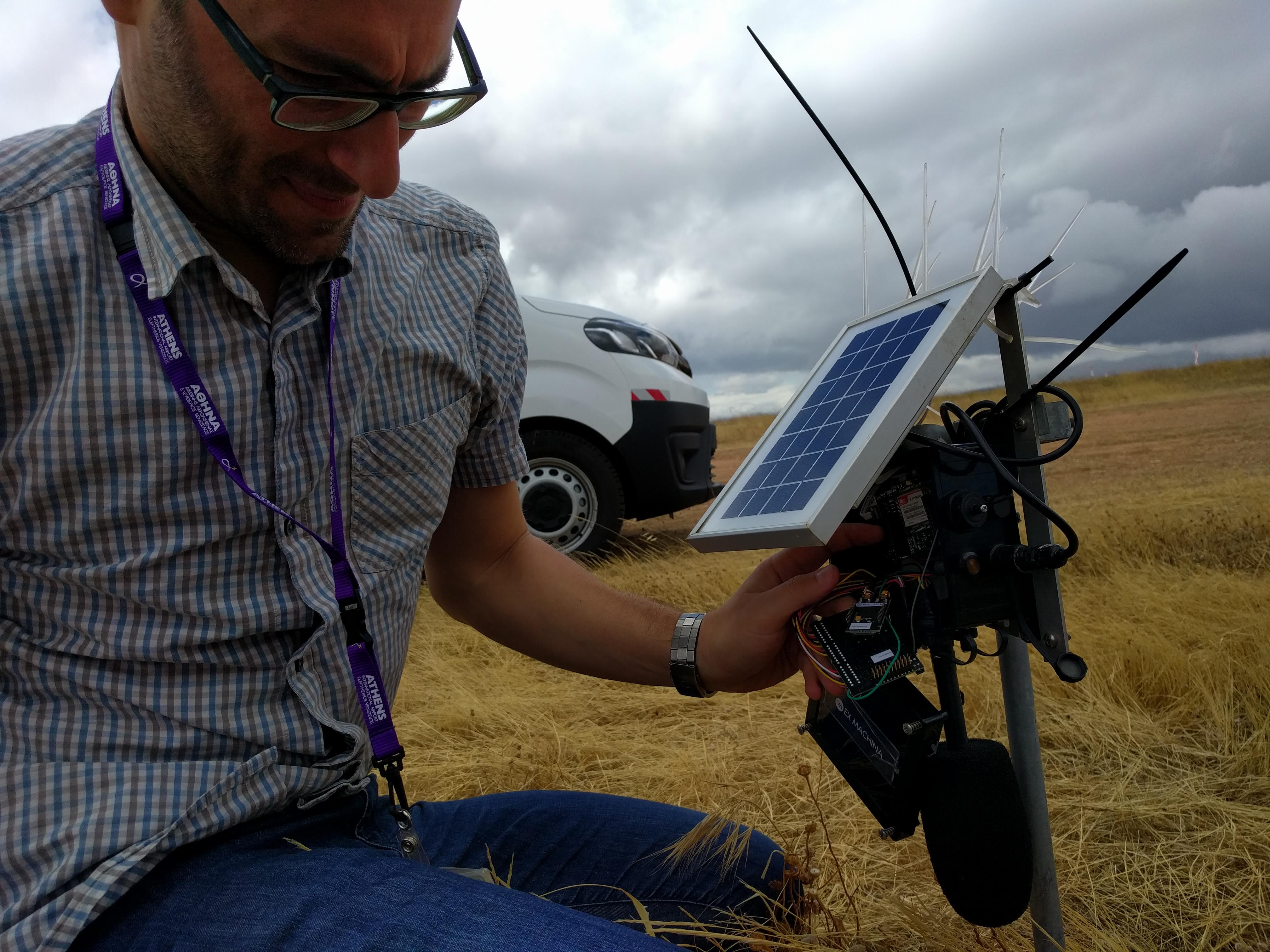
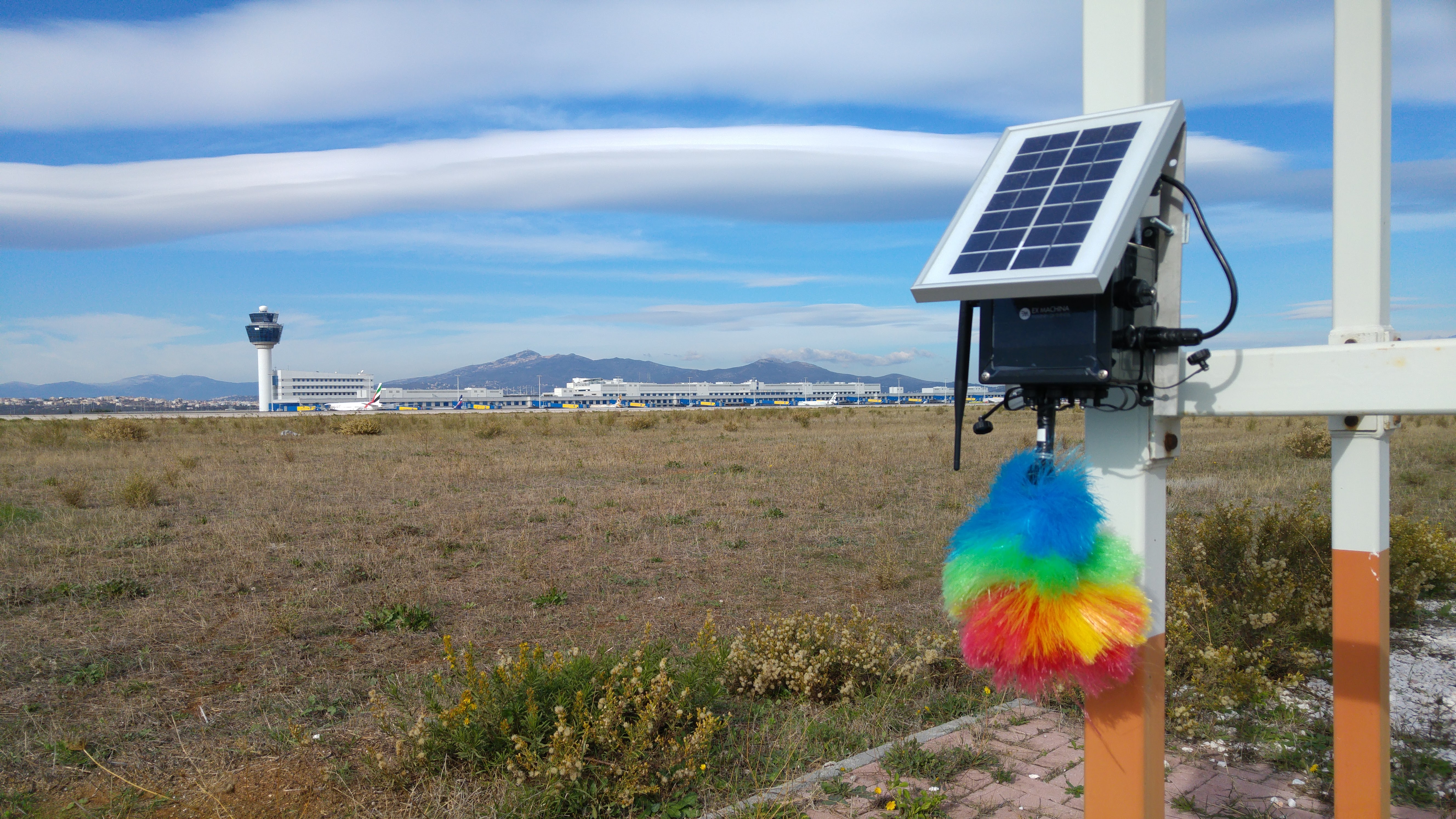
Ex Machina addressed both challenges with highly portable, stand-alone, connected sensor nodes — purpose-built for autonomous outdoor deployment with no dependency on grid power or wired network infrastructure.
Air Quality Monitoring: Each air quality sensor node is equipped with sensors for temperature, humidity, atmospheric pressure, ozone, and particulate matter. The hardware is a cost-effective, off-the-shelf assembly running custom firmware, making the solution both affordable and maintainable.
Aircraft Noise Monitoring: Ex Machina deployed an array of sound metering nodes to monitor and report on noise levels during takeoff. Through combined analysis of the acquired acoustic data and aircraft position information, the location of aircraft can be identified and reported to the airport’s environmental department for statistical analysis.
Autonomous & Connected: Both node types are fully energy-autonomous — each bears a photovoltaic panel and lithium batteries enabling continuous operation without any external power source. Dual communication modules, GPRS and LoRaWAN, ensure continuous real-time data streaming to the cloud as well as bulk data upload and over-the-air firmware upgrades.
Open & Vendor-Lock-In Free: Ex Machina’s strategic decision to use open-source technologies provides maximum flexibility, with protocol-agnostic solutions that give clients full access to their raw data without proprietary lock-in.
The Platform
The Ex Machina turn-key IoT solution combines on-site sensor deployment and communication infrastructure with cloud-side analytics, visualization, and reporting. The LoRaWAN infrastructure at AIA additionally enables a range of low-power wireless IoT use cases within the airport site — water quality monitoring, indoor air quality tracking, parking space management, and more.
The platform delivers:
- Live dashboards showing current noise levels and air quality across all monitoring points
- Automated alerts when measurements approach or exceed regulatory thresholds
- Correlation analysis linking acoustic events to aircraft positions and operations
- Regulatory reports generated automatically, eliminating manual data compilation
- Full raw data access for AIA’s own environmental analysts
Results
The IoT environmental monitoring solution for Athens International Airport is a successful deployment of Ex Machina’s IoT platform, providing valuable, actionable insights for regulatory compliance, environmental impact reduction, and improved relationships with surrounding communities.
The platform enables AIA to respond to community concerns with specific, timestamped data rather than generalized assurances. And because the solution is built on open technologies with full data access, AIA retains complete control over its environmental data — not dependent on a proprietary vendor’s roadmap or pricing.
The same approach — autonomous sensor nodes, dual-mode connectivity, cloud analytics — translates directly to other industries with environmental monitoring obligations: oil refineries, steel, cement and mining, energy producers, and construction.